The Hard Conversations…
There’s a conversation that keeps resurfacing in quiet corners of social spaces: that our generation has become deeply individualistic. Whether this stemmed from life stunning many of us into silence, being conditioned to “figure it out on our own”, or simply the need to survive one canon event after another – we can’t ignore the truth: we still need each other.
No matter how capable, independent, or self-sufficient we become, doing life entirely alone is exhausting. We were never wired to survive in isolation, even if at times it may be empowering.
And yet, for many people, what’s missing from this equation isn’t willingness; it’s choice. Not everyone has access to safe spaces, understanding communities or people they can lean on without fear of judgement.
But still, the truth remains…we thrive better in connection, not in isolation.
The Culture of Community
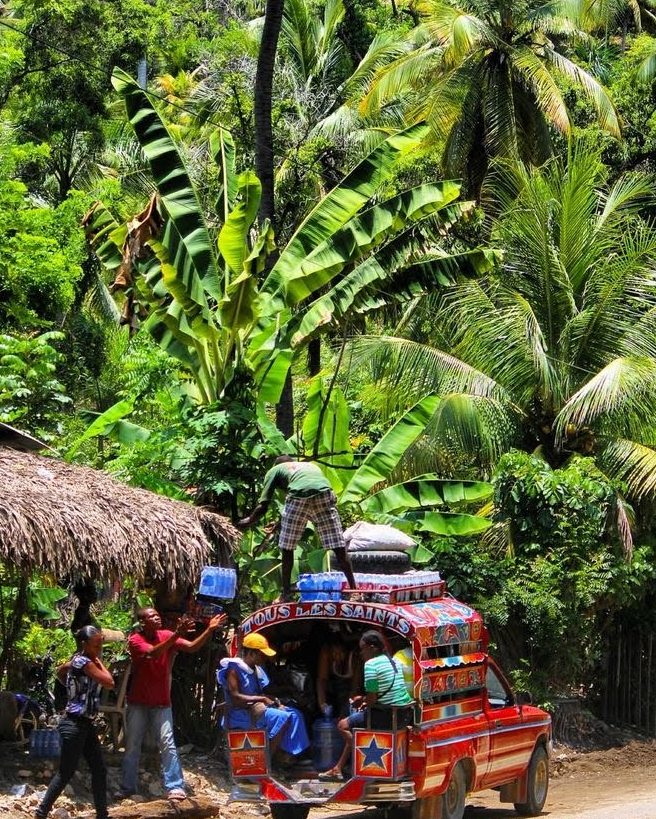
Growing up, I often heard my parents and older relatives talk about community and the role it played in their upbringing. Families looked out for one another; weddings for young couples were managed by the elders. Neighbours weren’t just neighbours; they were extensions of families. Children were taught proper manners, and the right values were instilled. In times of grief, the whole neighbourhood rallied around the bereaved family, ensuring they were never left alone in their sorrow.
But looking at the world now, it feels like that culture has shifted. Community now seems to depend on the nature of events; more celebratory than supportive, more about showing up for the fun moments than the hard ones. Few want to be uncomfortable. Few want to give of themselves when it costs them time or convenience.
My generation of relatives and friends have made a conscious decision to show up and be dependable. When the muscles of love and community are flexed it strengthens relationships. Whether it is in simple but thoughtful decisions such as; doing the early hospital visits with a friend while someone else chips in for the other shift or it’s taking some time from your lunch break because that neice is finally graduating from uni and will need someone to drop her off for her hair appointment. It all seems so simple, but it makes up a bigger picture.
Maybe it’s discomfort. Maybe it’s busyness. Or maybe we’ve grown so used to protecting our peace that we’ve forgotten what it means to be inconvenienced for love.
Community Requires Inconvenience
There’s a saying that goes, “To be loved is to be worth the inconvenience,” and I stand firmly by this.
Circling back to our growing individualism — we’ve built our lives around convenience: everything on our own time, our own terms, our own comfort. But community doesn’t thrive in convenience, it thrives in sacrifice. It’s a cycle of pouring, investing, and giving into others, even when it’s not ideal or convenient for us.
It looks like pulling a double shift so you can attend your friend’s birthday or their parent’s funeral. It’s saying “yes” to that last-minute call from your cousin who needs someone to pick up their child. It’s making that 30-minute phone call even though you’d rather text, because it’s been a while and you can tell something’s off.
October has been one of my heaviest work months this year— 2 a.m. wake-up calls for a 3 a.m. work shift, all while juggling other events and tasks. A simple SOS call had a co-worker, who has now become a dear friend, coming down for that week to help me stay afloat. That’s sacrifice, because she had to be up at 3 a.m. with me while doing her own work remotely. And if the situation were reversed? Without a doubt, I’d do the same for her.
The truth is, community will stretch you. It will require you to give when it’s not ideal, to show up when you’re tired, to care even when it costs you something. But that’s what makes it sacred, it’s a reflection of love that chooses to stay even when it’s not convenient to do so.
The Intimacy of Being Understood
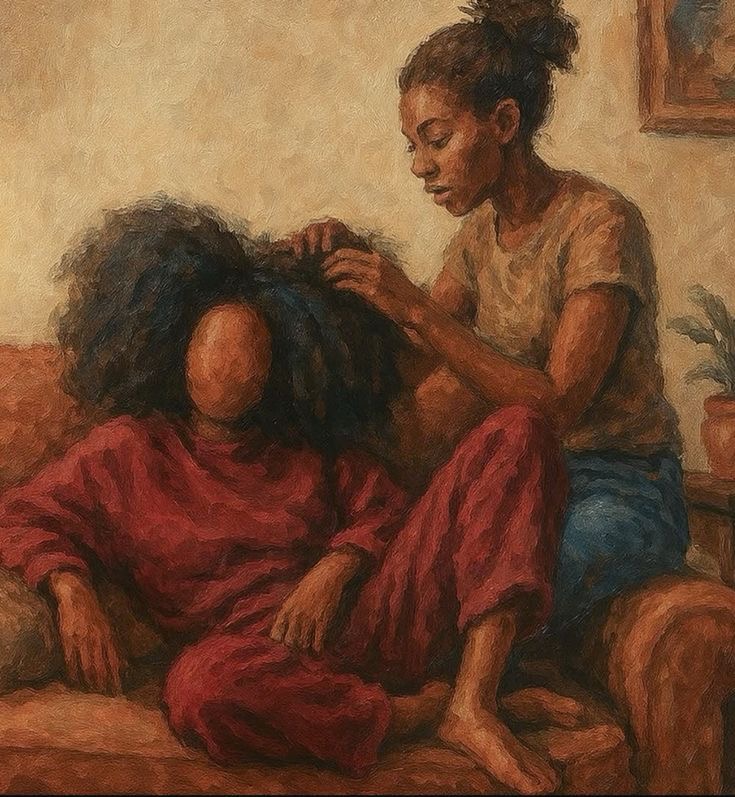
There’s a quiet intimacy in being truly understood. In a world where most people are pretending to be “fine”, it’s rare and healing to be seen without the performance.
We joke through our pain, as we say in Jamaica, “tek bad tings mek joke.” It’s our coping mechanism, our way of softening the blow. But sometimes, laughter becomes our mask. Beneath it, we’re numbing out — tired, misunderstood, and yearning for connection that feels real.
If we talk on the regular, then more than likely I’ve complained bitterly about the growing trend of TikTok Lives that discuss tragedies for engagement rather than the actual matter at hand. My major challenge is that these spaces are also viewed as communities, people show up expecting to be validated and when topics such as suicide, dreams and aspirations, or being one’s authentic self are met with sarcasm and not taken seriously, they eventually become the butt of a joke or trend.
But I won’t lament about my growing pains when it comes to social media, I’ve done that in my last two posts. The role of community, family and friends is to know those in your village specifically for who they are — their joys, their curiosities, and even their dislikes.
Maybe that’s why understanding feels so intimate, because it’s proof that someone looked past the smile, frown, or confusion and truly saw you.
We All Come with Our Rough Edges

Let’s be honest, none of us are easy to deal with. We all come with our histories, quirks, and emotional triggers. We carry childhood lessons and unspoken fears into our friendships, relationships, and workplaces.
And yet, connection is about choosing to stay; not because it’s easy, but because it’s worth it. Love, in any form, is sustained not by perfection, but by grace and the willingness to see people in their wholeness, not just their highlight reels.
I have a fairly large friend group, and let me just say, when all those personalities are in the same room — myself included, it’s quite something to see. (If you read this, please don’t fight me!). While they are all terrific and loving people, they’ve all had some rough days. However, the more you truly get to know a person, the easier it becomes to understand what ticks them off and what habits they have — some of which may not be particularly great. It’s in pursuing these connections that you move from doing life adjacent to others, to truly doing life with them.
Balancing: Boundaries Are Acts of Love Too

Here’s the hard part about being dependable: people start depending on you — a lot. And if you’re naturally a giver or a people-pleaser, it can become a heavy load to carry.
While community thrives on giving, it’s also important to note that constant giving without boundaries leads to burnout. Being dependable doesn’t mean being available for everything. You can be supportive and selective. You can love people deeply without neglecting yourself.
Community needs your presence, not your depletion. Saying “no” doesn’t make you less loving. Sometimes, it’s the only way to make your “yes” more meaningful. Boundaries don’t weaken connection, they protect it. After all, you can’t pour from an empty cup.
Strength in the Ask
We often assume people can see when we’re struggling. We drop hints, go quiet, withdraw — hoping someone will notice. But the truth is, we’re not mind readers.
Asking for help takes courage. It means admitting we have limits, and that’s something society rarely celebrates. But asking doesn’t make you weak, it makes you human. It opens the door for someone else to step in, to feel useful, to love you in the way you need.
I’ve made a concerted effort to be more forthcoming about my experiences navigating womanhood with the women in my life; the changes in my body, the concerns I have, because let’s be real — this is my first time being this age. Surprisingly, on two recent occasions I realised something I’d been worried about was something other women were also experiencing.
There is beauty in showing up for others and letting others show up for you. This is not a one-way street.
A Quiet Reminder
Maybe the modern version of “It takes a village” looks a little different now. Maybe it’s a friend checking in after a long week. Maybe it’s your co-worker sharing their lunch. Maybe it’s a stranger holding the door open when you’re too tired to carry one more thing.
Community doesn’t always have to look grand. Sometimes it’s built on small, consistent acts of care, the kind that remind us that we’re still connected, still needed, still seen.
So here’s your reminder:
You don’t have to do it all alone.
You never were meant to.
Reflection Questions for You
- What’s one way you can make space for connection, even when it’s inconvenient?
- When was the last time you allowed someone to show up for you?
- How can you practise being an active part of your village this week and for November?
 The diary of a 20 something
Leave a comment